MORE AND LESS THAN A FRIEND
The Songwriting Partnership of Tamás Cseh and Géza Bereményi in Hungary
My book More and Less than a Friend: The Songwriting Partnership of Tamás Cseh and Géza Bereményi in Hungary was published by Serving House Books on July 11, 2026! You can purchase it through Bookshop.org, Barnes & Noble, Amazon, and (in Hungary) Libristo. Read more about it here. The e-book edition was released on September 30, 2026. (Above, the print cover image appears on the left and the e-book image on the right.)
In December 1970, Tamás Cseh and Géza Bereményi met after midnight, among mutual friends, at a pub in Budapest. The next day, they wrote their first two songs together; over the following decades, they wrote hundreds more, released albums, created stage shows, and influenced countless Hungarian musicians and writers. In the essay collection More and Less than a Friend, the writer and translator Diana Senechal introduces Cseh and Bereményi's work to an English-speaking audience. Some of the essays take up individual songs, albums, or stage shows; some explore the songs' recurring themes; and some consider the songs' history and legacy. Lively and insightful, and supplemented with a playlist, this book will appeal to those interested in Hungary, music, songwriting, poetry, language, and the whimsicality of life.
The book comes with a Spotify playlist. For those without Spotify access, here is a YouTube version of the same list.
Upcoming Events
Brooklyn, October 26, 2026, 14:00, Pratt Institute: Presentation in Lara Allen's seminar.
Újszász, November 5, 2026, 16:00, Újszászi Könyvtár: Diana Senechal will speak with Zsolt Bajnai about the book at a meeting of the Betűtér Irodalmi Kör.
Budapest, November 11, 2026, 19:00, Nyitott Műhely: Diana Senechal will discuss the book with László Bérczes (and lead the audience in singing a few songs) in an event co-hosted by the Nyitott Műhely and the Offline Rezervátum. See the event listing for details.
Endorsements
"This is a remarkable book. Diana Senechal brings together her talents as a writer, translator, musician, poet, and cultural critic to explore the multifaceted relationship between Tamás Cseh and Géza Bereményi, two Hungarian songwriters whose partnership started in the seventies and spanned decades. Senechal examines how the duo—Cseh as composer and performer and Bereményi as lyricist—created an array of compelling characters that appeared in song after song and in various stage shows and albums. Her translations of the works and her analysis of sonic patterns are subtle, engaging, and historically informed, capturing the allusiveness and playfulness of songs that are simultaneously personally, culturally, and politically evocative but not didactic. Senechal's prose is a pleasure to read—clear, thoughtful, and precise—portraying the creative practices of two powerful and underappreciated artists."
— Ernest Suarez, co-author of Poetic Song Verse: Blues-Based Popular Music and Poetry; David M. O’Connor Professor of English at the Catholic University of America
"Again and again, chance plays its games, making miracles possible. Such a miracle occurred when, in the winter of 1970, two young men met in the early hours of morning, and from that meeting songs were born that would extend across the generations. Chance brought Diana Senechal to Hungary so that she would encounter these songs, fall in love with them, write a book about them—and through this, another miracle might happen: the song lyrics and melodies might attract American readers, potential listeners. The chance of miracle guided Diana when she put her profound, precise, yet simple and infinitely personal work on the table. This simplicity and intimacy is the common watermark of the book's two heroes, Géza Bereményi and Tamás Cseh; the writer, Diana Senechal; and our conviction that each reader will likewise connect with the book, the songs, and two unfamiliar, charismatic creators."
— László Bérczes, author of Cseh Tamás: Bérczes László beszélgetőkönyve ("Tamás Cseh: László Bérczes' Conversation Book"); theatre director; Ördögkatlan Festival co-founder and co-organizer
Reviews and Comments
— John Wall Barger, Amazon and Goodreads review, October 15, 2026.
— Fruzsina Hantó, "Hóregénnyel a pokoli hőség ellen: túlélési stratégiék az Ördögkatlan Fesztiválon" ("Fighting the Hellish Heat with a Snow Novel: Survival Strategies at the Ördögkatlan Festival"), Népszava, August 8, 2026.
Interviews
The writer Zsolt Bajnai interviewed me about the book; the interview appeared in blogSzolnok on September 30, 2026.
Video
At the event at the Ördögkatlan Fesztivál, I sang my translations of two Cseh-Bereményi songs. Here is a video excerpt from "Budapest." (Thanks to E.K. for the video.)
Past Events
Szeged, October 15, 2026, 18:00, SZTE Bölcsészet- és Társalomtudományi Kar (Quadrivium Műhely - Eötvös Loránd Kollégium). Here you can see photos and a summary.
Szolnok, October 5, 2026, 2:35, Varga Katalin Gimnázium. With Gyula Jenei, in the school library. Here are some photos.
Szolnok, October 1, 2026, 16:30, Verseghy Ferenc Könyvtár: Diana Senechal discussed the book with Gyula Jenei. You can see photos here. The Verseghy Library commented: "The writer, translator, and teacher Diana Senechal presented her English-language essay collection on the work of Tamás Cseh and Géza Bereményi at the Verseghy Ferenc Library in Szolnok. At the event, with the poet and Attila József Prize winner Gyula Jenei, she discussed the songs' deeper layers of meaning, the translatability of cultural references and wordplay, and the international accessibility of the work. The author made the Hungarian-language podium discussion even more memorable by singing a beautiful song in English." ("Diana Senechal író, műfordító és tanár a szolnoki Verseghy Ferenc Könyvtárban mutatta be Cseh Tamás és Bereményi Géza munkásságáról szóló angol nyelvű esszékötetét. A rendezvényen Jenei Gyula József Attila-díjas költővel beszélgetett a dalok mélyebb jelentésrétegeiről, a kulturális utalások és szójátékok fordíthatóságáról, valamint a művek nemzetközi érthetőségéről. A magyar nyelvű pódiumbeszélgetést a szerző tette még emlékezetesebbé, aki angol nyelven énekelt el egy gyönyörű dalt.")
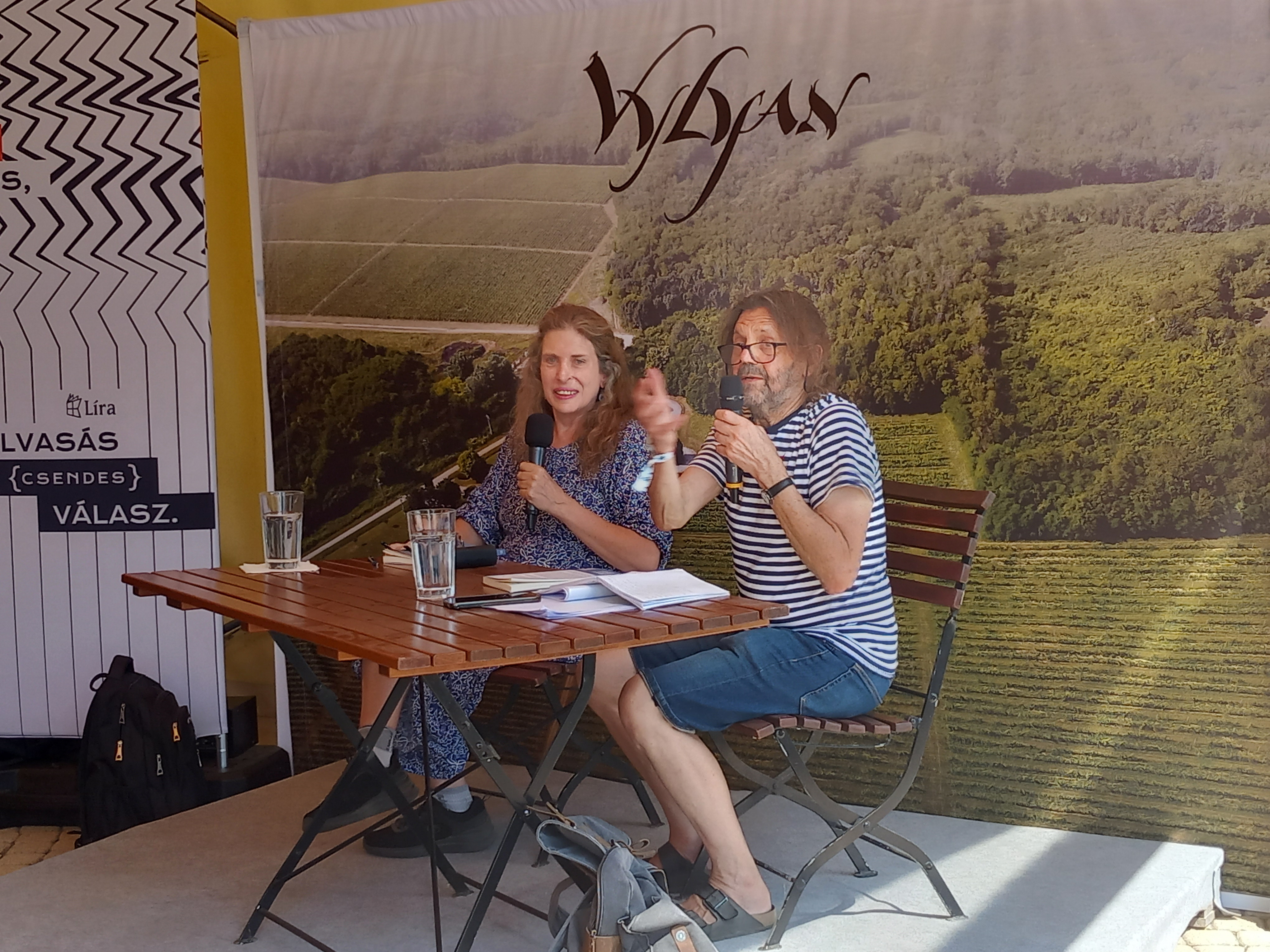
Book discussion, Wednesday, August 5, 2026, 14:00: Diana Senechal discussed More and Less than a Friend with László Bérczes at the Vylyan Terasz in Kisharsány, at the Ördögkatlan Festival. The event was later highlighted in a Népszava article by Fruzsina Hantó. Thanks to everyone who came to the event and made it a wonderful occasion, to László Bérczes for the conversation, and to the Vylyan Winery for the hospitality!
September 6, 2026, 12 noon Pacific Time (U.S.), 3 p.m. Eastern Time (U.S.), 9 p.m. CET (Hungary): Diana Senechal will hold a 40-minute Zoom event (in English) about the book. (The Facebook listing for the event can be found here.
Credits
Parts and versions of various chapters were previously published as follows:
Parts of Chapters 1, 3, and 4 previously appeared in the essay "'Tárá-ráálá-rálárám': The First Two Albums of Tamás Cseh and Géza Bereményi," Literary Matters, Issue 16.2.
An earlier version of Chapter 5 was published as the article "Frontátvonulás ['Frontal Passage']: Tamás Cseh and Géza Bereményi's Album of No Return," Hungarian Cultural Studies, Volume 17 (2024).
An earlier version of Chapter 7 was published as the essay "A Syllable That Turns Into the World," Asymptote, April 2024.
An earlier version of Chapter 10 was published as the essay "Opening the Jar: Grácia Kerényi and the Cseh-Bereményi Opus," Hungarian Literature Online, February 15, 2025.
Print book cover art: adapted from Juan Gris, Still Life with a Guitar (1913).
E-book cover photo: Emil Novák, photograph of Géza Bereményi and Tamás Cseh (1972). From the collection of the MNM KK – Petőfi Irodalmi Múzeum (Petőfi Literary Museum).
Author's Corrigendum
All the corrections listed below are incorporated in the e-book edition, released on September 30, 2026. This list will remain here for reference. The e-book will have a few additional edits, additions, and cuts that are not listed here.
On page 20, paragraph 1, the dates (which I had inferred) should be October 24 and 25, 1956, not October 22 and 23, 1956. The e-book version will mention just the month and year (and the time span of two consecutive days).
On page 25, the poem I quote (in my English translation) and attribute to János "Dixi" Gémes was written by an different, unrelated Dixi: Lajos Dixi Diószegi (poems.dixiworld.com).
On pages 11, 40, 54, and 55, I will adjust the brief descriptions of the songs "Egy kitalált személy," "Désiré és az eső," and "Amikor Désiré megérkezett Budapestre" (the changes are slight but significant).